


Product-market fit is the turning point where your startup stops feeling like an uphill push and starts to feel like the market is pulling your product out of you. Customers keep coming back. They tell their friends. Revenue starts to grow more predictably. And for the first time, you’re not just “testing an idea” — you’re building a real business.
This deep-dive guide will walk you through exactly what product-market fit (PMF) is, why it matters so much, how to measure it, and how to systematically work your way toward it using practical experiments, proven frameworks, and real-world case studies like Uber, Figma, and Notion.
We’ll also use the StartupDevKit Product-Market Fit Ladder — a cumulative, 5-level diagnostic model you can use to figure out where you are right now and what to focus on next.
Who this guide is for:
- Founders at the idea or pre-MVP stage who want to avoid building something nobody wants.
- Founders with an MVP or early product who are getting some traction but aren’t sure if they’re on the right track.
- Early-stage teams with paying users who want to deepen their fit, improve retention, and build a product-led growth engine.
By the end, you’ll not only understand product-market fit — you’ll have a practical roadmap and a set of experiments you can start running this week.
What Is Product-Market Fit?
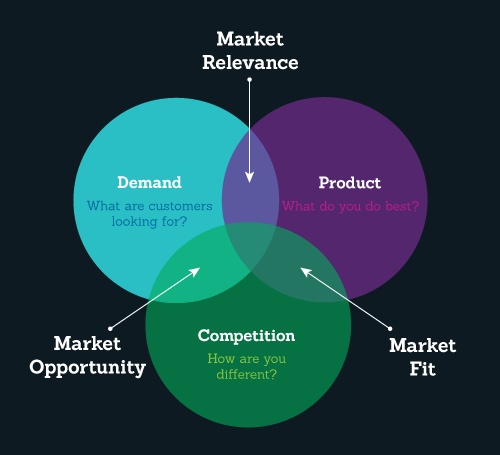
At its core, product-market fit happens when you’ve built a product that consistently solves a meaningful problem for a clearly defined group of people, and those people keep coming back, tell others, and are willing to pay in a way that can support a sustainable business.
You can think of it as the overlap of four key forces:
- A painful problem that actually matters to people.
- A clearly defined target market that shares that problem.
- A product that reliably solves that problem in a way users understand and value.
- A scalable demand engine (channels, messaging, and pricing) that allows you to keep reaching and serving similar customers.
When these forces line up, the result is product-market fit.
The Classic 40% PMF Signal
One of the most widely cited practical tests of product-market fit comes from Sean Ellis. The idea is simple: if at least 40% of your users say they would be “very disappointed” if they could no longer use your product, that’s a strong signal that you’re close to or at PMF.
You can run this test with a simple survey asking users: “How would you feel if you could no longer use [Product]?” with options such as “Very disappointed,” “Somewhat disappointed,” “Not disappointed,” and “I no longer use [Product].”
Retention Curves and Behavioral Signals
Another powerful way to understand product-market fit is to look at your retention curves. If your retention curve drops to zero over time, users are trying your product but not sticking around. If, however, your retention curve falls at first and then flattens, that suggests you’ve found a group of users who are getting enough value to continue using the product over time. That “flattening point” is often where product-market fit starts to emerge.
Key behavioral signals of PMF include:
- Users returning on their own without being chased by promotions or discounts.
- Consistent usage patterns (for example, weekly or daily active users stabilizing instead of falling off).
- Customers proactively reaching out for improvements and integrations, because they rely on your product.
A Simple PMF Formula
While no single formula can fully capture product-market fit, a useful mental model is:
Product-Market Fit = Problem–Solution Fit × Audience Fit × Retention × Scalable Demand
If any one of these is missing, you may see temporary spikes of traction, but it will be hard to turn that into a lasting, healthy business.
⭐ Practical Tip: Don’t rely on just one signal. Combine qualitative feedback (what customers say), quantitative metrics (how they behave), and practical tests (like the 40% “very disappointed” survey) to assess where you really are.
Why Do You Need Product-Market Fit?
According to a study of startup post-mortems by CB Insights, the top reason that startups fail is that there is no market need for their product.
42% of failed startups in that study cited “no market need” as the primary cause of their failure. In other words, they built something people didn’t care enough about to use or pay for.
When you don’t have product-market fit, you’ll typically see:
- High churn and low retention.
- Unpredictable or flat revenue.
- Paid acquisition that doesn’t pay back.
- Founders constantly changing positioning, features, or audiences without a clear pattern.
On the other hand, when you do achieve product-market fit, several important things improve at once:
- Customers stay longer, use the product more, and generate higher customer lifetime value (CLTV).
- Your messaging gets sharper because you truly understand the problem and the user’s language.
- Marketing becomes more efficient, because you know who to target and what to say.
- Investors take you more seriously because your traction is grounded in real customer value, not just experiments.
You can’t sustainably grow or scale a startup without at least a solid level of product-market fit. Growth before fit often leads to wasted spend, burnt-out teams, and disappointing results.
⭐ Practical Tip: Before you pour money into growth channels like paid ads or outbound sales, make sure you’ve validated that your product solves a real, urgent problem for a specific group of people — and that those people are coming back on their own.
Case Studies: Uber, Figma, and Notion
It’s easier to understand product-market fit when you see it in action. Let’s look at three different examples: Uber, Figma, and Notion. Each reached PMF in different ways, but they share common patterns: a painful problem, a focused audience, a strong value proposition, and deep customer reliance.
Case Study 1: Uber
Before Uber emerged, there wasn’t a major grassroots movement demanding a new kind of taxi service. People weren’t marching in the streets asking for ride-hailing apps. But there were real, consistent pains: not being able to find a cab when needed, not knowing when or if it would arrive, inconsistent quality, unclear pricing, and difficulty paying.
Uber identified this gap and turned it into an opportunity. They provided:
- On-demand rides through a mobile app.
- Transparent pricing and ETA estimates.
- Simple, cashless payments with stored cards.
- Ratings for both drivers and riders to keep quality high.
For riders, this solved a problem of convenience, reliability, and predictability. For drivers, it created a new flexible earning opportunity. As more riders and drivers joined, the service became more valuable and more available — a classic network effect.
It took a few years for Uber to move from early adopters to the mainstream. But once enough people tried it and found it better than hailing a cab, usage spread quickly through word-of-mouth and social proof. The product didn’t change dramatically at that point — what changed was awareness, density of drivers, and the strength of the network.
Uber achieved product-market fit when its popularity surged and a large portion of their customer-base became heavily reliant on their service in their daily lives.
Their product didn’t change, but its demand and supply did.
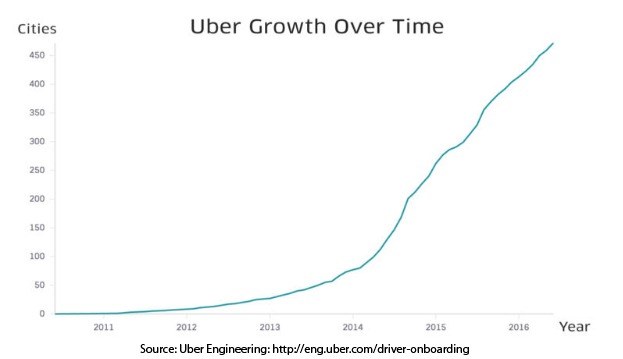
Look at that growth. It’s staggering how fast it grew.
That’s a key lesson: Uber’s product-market fit emerged not just from building an app, but from combining product, supply, and demand with a model that created compounding value over time.
⭐ Practical Tip: When analyzing your own product, ask: “What existing behaviors are people already doing that I can dramatically improve with more convenience, reliability, or predictability?” Sometimes PMF comes from making old behaviors dramatically better rather than inventing something completely new.
Case Study 2: Figma
Figma’s product-market fit story is a powerful example of solving a deep collaboration problem in an existing, crowded market. Before Figma, designers used tools like Sketch, Adobe XD, Photoshop, and others. But collaboration was painful. Files were passed around. Version control was messy. Working together in real-time was difficult or impossible.
Figma changed the game by bringing design into the browser and making real-time, multiplayer collaboration a core part of the product. Designers, product managers, and engineers could all work together in the same file at the same time. Comments, feedback, and changes happened live instead of through long email threads or static mockups.
How did Figma signal product-market fit?
- Teams adopted Figma bottom-up, often starting with a single designer who invited colleagues.
- Retention was strong: once teams switched, they typically stayed and consolidated their design work there.
- Figma became embedded in workflows — companies built processes, documentation, and design systems around it.
- Virality and collaboration loops were built-in: every time someone shared a Figma file, it introduced more people to the product.
This is a great example of product-market fit tied closely to collaboration and network effects: the more a team used it together, the more valuable it became to everyone involved.
Case Study 3: Notion
Notion is a flexible, all-in-one workspace for notes, docs, wikis, and databases. On the surface, it entered a market full of alternatives: Evernote, Google Docs, Confluence, Trello, and many others. So how did Notion achieve product-market fit?
Instead of trying to win on one single use case, Notion leaned into flexibility and customization — while still making it simple for people to get started. Users could build their own workflows, templates, and systems inside Notion: personal productivity setups, company wikis, editorial calendars, CRM systems, product roadmaps, and more.
Key signals of Notion’s product-market fit included:
- A huge community of users creating and sharing templates.
- Strong user retention and daily usage for personal and team workflows.
- Bottom-up adoption in companies, where individuals and teams brought Notion into their organizations.
- Expanding use cases: once people used it for one purpose, they often adopted it for others.
Notion’s PMF story shows how flexibility plus community can create strong, compounding value — especially when users are empowered to shape the product to their needs and share what they build.
⭐ Practical Tip: You don’t need as broad a scope as Notion, but you can borrow the idea of empowering your users. Ask yourself: “How can I give my users more control, configuration, or customization that makes my product more valuable to them over time?”
The StartupDevKit Product-Market Fit Ladder
Product-market fit isn’t binary. It’s not just “you have it” or “you don’t.” In reality, there are levels of fit, and each level builds on the previous one. Understanding where you are helps you avoid two big mistakes: thinking you have PMF when you don’t, and trying to scale before you’re ready.
The StartupDevKit PMF Ladder is a cumulative, 5-level diagnostic tool. Each level includes all of the positive signals from the levels below it, plus additional signals that indicate deeper and more durable fit.
Level 1 — Weak or No Fit
At Level 1, nothing is really working yet. You might have a product, a landing page, or even some signups, but the reality is:
- Users don’t clearly understand what your product does or why they should care.
- Retention is low and engagement is sporadic or nonexistent.
- Your messaging doesn’t resonate and is often feature-focused rather than benefit-focused.
- Sales and adoption feel like pushing a rock uphill.
There’s no shame in being here — almost every startup starts at Level 1. The goal is to move out of this level as quickly and as thoughtfully as possible by talking to users, refining your problem definition, and validating whether your concept has real potential.
Level 2 — Partial Fit (Segment-Level Fit)
At Level 2, you start to see signs of life — but only with a specific group of people or a narrow use case. You might notice that while most users churn, a certain type of user really loves your product.
Signals of Level 2 include:
- A small niche segment gets meaningful and repeatable value from your product.
- Retention starts to stabilize for that segment, even if the overall average looks weak.
- Some users are willing to pay and tell you they don’t want to lose your product.
- Feedback from that niche is specific, constructive, and often enthusiastic.
This is where you often discover your initial wedge into the market. Your job at this level is to understand exactly who these people are, what problem you’re solving for them, and why your product works for them better than their alternatives.
Level 3 — Strong Fit (Consistent PMF)
At Level 3, your product-market fit becomes more consistent and reliable. You move beyond a narrow niche into a clearer, repeatable pattern of value delivery.
Signals of Level 3 include:
- Retention curves flatten for your target users instead of trending toward zero.
- Activation and engagement patterns become more predictable.
- Users can clearly articulate your value proposition in their own words.
- Sales cycles shorten because prospects “get it” faster and see the value more clearly.
- Improvements in your product, onboarding, and messaging reliably translate into better metrics.
Most healthy early-stage startups aim for this level before aggressively scaling. It’s where growth efforts start to become efficient and compounding instead of expensive and fragile.
Level 4 — Viral Fit (Self-Spreading Product)
At Level 4, you still have all of the strong fit characteristics from Level 3, but a new dynamic emerges: your product starts to spread on its own through word-of-mouth and collaboration.
Signals of Level 4 include:
- Users invite others into the product because it’s more valuable when they collaborate or share.
- Word-of-mouth becomes a measurable acquisition channel.
- Organic signups begin to increase without direct marketing pushes.
- Built-in sharing, collaboration, or community features create recurring exposure for your product.
This is where products like Figma and Notion really shine. Their value is deeply tied to collaboration and sharing, which naturally fuel organic growth when the underlying product is strong.
Level 5 — Explosive Fit (Self-Amplifying Growth Engine)
Level 5 is the rare but powerful stage where your product, market, and growth engine reinforce each other in a self-amplifying loop. You still have all of the signals from Levels 1–4, and on top of that:
- Organic usage drives a large portion of new user acquisition.
- Network effects make the product more valuable as more people use it.
- Virality loops provide recurring and predictable growth, not just occasional spikes.
- Expansion revenue grows as teams deepen their use and add more seats, usage, or features.
- Your growth engine (product, messaging, and channels) starts to feel partly or fully self-sustaining.
- Your product becomes a default choice or standard in its niche or category.
Most startups never reach Level 5 — and that’s okay. You can build a strong, sustainable company at Level 3 or Level 4. But understanding these levels helps you aim your strategy, especially if you’re building a product-led growth company or something that relies on network effects.
⭐ Practical Tip: Use the PMF Ladder as a self-diagnostic tool. Ask: “Which level are we really at?” and “What specific signals are missing that would move us up one level?” Your goal is to climb one rung at a time, not jump from Level 1 to Level 5 overnight.
How to Get to Product-Market Fit
Product-market fit doesn’t happen by accident. It happens when you systematically move from guessing to learning, from assumptions to evidence, and from vague target audiences to clearly defined segments with real, painful problems you can solve.
One helpful way to think about this journey is the PMF Roadmap — a sequence of stages that guide your focus and experiments.
The PMF Roadmap
- Problem Discovery – Understand your customers’ world deeply, including their pains, workflows, and goals.
- Problem Validation – Confirm that the problem you’re focused on is real, painful, and frequent enough to matter.
- Solution Validation – Test different value propositions, offers, and solution concepts before you overbuild.
- MVP Launch and Early Retention – Ship a minimum viable product that solves the core problem and observe how real users behave.
- Refinement and Scaling Loops – Use data, feedback, and experiments to improve the product to align with demand from users, improve retention, deepen value, and build growth loops.
This roadmap aligns strongly with the way we approach idea validation, MVP development, and early-stage growth in the StartupDevKit online incubator program, especially using our structured idea validation and MVP-building processes.
Start with Problem Discovery and Validation
Many founders jump straight into building an MVP or even a full product before thoroughly understanding the problem. That’s a fast route to Level 1 (weak fit) and wasted time.
Instead, start with:
- Customer interviews to understand pains, workflows, and context.
- Surveys and polls to validate patterns you’re seeing in interviews.
- Jobs-to-Be-Done style questions that focus on what people are trying to get done and why.
If you haven’t yet validated your startup idea, you’ll benefit greatly from going through our online incubator program and taking the idea validation course provided in it. That process is designed to help you gather the critical information you need to position your product effectively and move toward PMF with confidence.
Build a Minimum Viable Product (MVP) the Smart Way
Once you’ve validated that a real problem exists for a clearly defined segment, your next step is to create a minimum viable product — a focused version of your solution that lets you test whether your product actually solves the problem well enough for people to use it and, ideally, pay for it.
For a deeper dive into building MVPs, see our guide: How to Build a Minimum Viable Product (MVP).
Your MVP should be based on real customer insights and ideally created after you’ve interviewed many target customers and developed clear customer profiles and buyer personas. These help you make better decisions about features, messaging, and positioning.
There are also situations where you can throw together a simple MVP quickly — for example, a manual concierge service or a basic no-code prototype. In those cases, you can continue validating your idea while people are already using the earliest version of your product.
⭐ Practical Tip: Don’t confuse “minimum viable” with “low quality.” The MVP should be the smallest version of your product that can reliably solve the core problem for a specific group of users — not a random collection of half-finished features.
Proven PMF Experiments to Pull From
There’s no single experiment that guarantees product-market fit. Instead, think of experimentation as a toolkit. Depending on your stage, product, and audience, different experiments will be more or less appropriate.
Below is a menu of high-impact PMF experiments. You do not need to run them all. Instead, choose the ones that best match your stage and the questions you’re trying to answer.
1 — Problem Discovery Experiments
- Customer interviews: One-on-one conversations with people in your target audience to understand their pains, goals, and current solutions.
- Problem ranking surveys: Ask respondents to rank their top problems in a certain area to see where your target problem sits in their priorities.
- Jobs-to-Be-Done problem mapping: Explore what people are trying to get done, where they struggle, and what “success” looks like for them.
2 — Solution Signal Experiments
- Landing page tests: Create a landing page that clearly explains your value proposition and includes a call-to-action for signups, waitlist, or early access.
- Demo video tests: Use a short video to show how your product works, then measure interest via signups or replies.
- Pre-sale or intent-to-pay tests: Offer pre-orders or a “reserve your spot” option to gauge willingness to pay and urgency.
3 — MVP and Prototype Experiments
There are multiple ways to deliver and test your early product. You don’t need all of them. Choose the one that best fits your resources and risk tolerance.
- Concierge MVP: Manually deliver the service behind the scenes while customers experience it as if it were automated. This helps you learn fast without building full infrastructure.
- Wizard-of-Oz MVP: Create the appearance of a fully functional product, but fulfill key steps manually until you validate the demand and workflows.
- Clickable prototype: Use design tools to create interactive mockups that simulate the product without building the backend.
- No-code MVP: Use tools like website builders, automation platforms, and databases to build a functional product without heavy engineering.
- Email or manual fulfillment MVP: Deliver core value through email or simple workflows to validate whether people care enough to engage and pay.
4 — Pricing Experiments
- Willingness-to-pay surveys: Ask potential customers what they would realistically pay for your product or service.
- Pricing tier comparisons: Test different bundles and feature sets to see what resonates and converts best.
- Price sensitivity tests: Experiment with different price points to understand demand elasticity and perceived value.
5 — Activation and Onboarding Experiments
- Onboarding flow optimization: Simplify your onboarding steps to help users reach their first “aha moment” faster.
- Time-to-value reduction: Remove friction, pre-fill data, or provide templates so new users experience value as quickly as possible.
- Guided tours or checklists: Help users learn the product through guided steps, tooltips, or in-app checklists.
6 — Retention Experiments
- Trigger experiments: Test different notification strategies (email, in-app, push) to remind users at the right moment to continue their journey.
- Feature adoption experiments: Encourage users to adopt sticky features (those most correlated with retention) with in-app prompts and education.
- Habit-loop optimization: Design usage patterns that make it natural to return on a daily, weekly, or monthly cadence, depending on the product.
7 — Growth Loop Experiments
- Simple referral prompts: Ask happy users to invite a friend or colleague, and make it easy to do so.
- Invitation flows: Make collaboration or team usage part of the natural way people use your product.
- Share-to-unlock mechanisms: Offer additional value (such as extra features, credits, or content) in exchange for sharing or inviting others.
⭐ Practical Tip: Don’t run experiments just for the sake of it. Start with a clear question (“Why is retention low?” “Who gets the most value?” “Is our pricing aligned with the market?”) and choose experiments that help you answer those questions.
Using the Lean Startup Methodology to Reach Product-Market Fit
The Lean Startup methodology is a powerful way to structure your journey toward product-market fit. It centers around a simple loop: Build → Measure → Learn. Instead of building in a vacuum, you continuously ship, observe, and adapt.
Here’s a quick refresher on how the Lean Startup loop supports PMF:
- Build: Create an MVP, prototype, or experiment designed to test a specific assumption.
- Measure: Collect data from user behavior, signups, retention, or feedback.
- Learn: Interpret the results and decide whether to persevere (improve the current approach), pivot (change direction), or stop.
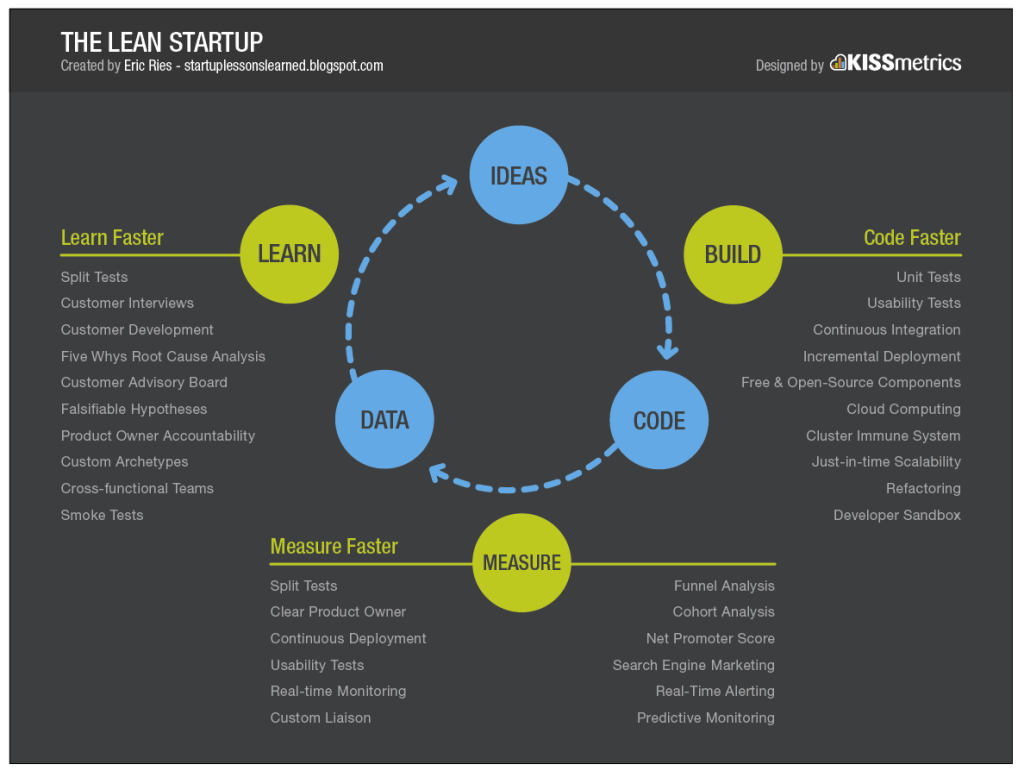
To use Lean Startup effectively for PMF, you need to define your hypotheses, decide on your success metrics, and choose experiments that actually test those hypotheses.
Breaking It Down Step-by-Step
- Write down your hypotheses. What do you believe about your customers, their problems, your solution, and how they’ll use or buy it?
- Turn those hypotheses into experiments. For example: “If we improve onboarding, more users will reach activation within 24 hours.”
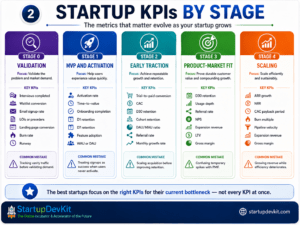
- Define your key performance indicators (KPIs). Use metrics that matter like activation rate, retention, and engagement. You can use this guide to help you choose: 34 Types Of Startup KPIs & Metrics To Measure With Examples.
- Instrument event tracking. If your product is software-based, you’ll often need to code in event tracking snippets at key points in your funnel.
- Run the experiments and collect data. Market your MVP or experiment to a relevant audience, then watch what users actually do, not just what they say.
- Learn from the data and conversations. Combine analytics with user interviews and surveys to understand the “why” behind the numbers.
- Repeat. Keep iterating through this loop as you climb the PMF Ladder.
⭐ Practical Tip: Start with smaller, faster experiments before you invest months into building bigger features. The more cycles of Build → Measure → Learn you can run, the faster you’ll learn what truly moves you toward product-market fit.
Continually Experimenting to Reach Product-Market Fit
Product-market fit is not a one-time finish line. Markets change, competitors emerge, user expectations evolve, and your own product will grow more complex over time. To maintain and deepen PMF, you need a culture of ongoing experimentation.
Sometimes your product just needs small tweaks to hit PMF: better positioning, clearer messaging, simpler onboarding, or a tighter focus on your best-fit users. Other times, you may need more substantial changes or even a pivot.
Here are a few common reasons why a product that seems promising might not be gaining traction yet — and what you can do about it.
When You Need to Tweak Instead of Pivot
If your product isn’t gaining traction (in terms of traffic, signups, active usage, or revenue), it doesn’t necessarily mean you should throw it away. First, consider whether you need to adjust:
- Your positioning: Are you clearly communicating who your product is for and what problem it solves?
- Your pricing: Is your price aligned with your perceived value and your target market’s ability and willingness to pay?
- Your onboarding and activation: Are people reaching value quickly, or do they get stuck early in the journey?
- Your target audience: Are you going after the segment that feels the most pain and has the most urgency?
Often, issues like poor wording, weak calls-to-action, unclear benefits, or targeting the wrong persona can make a promising product look like it doesn’t have PMF yet.
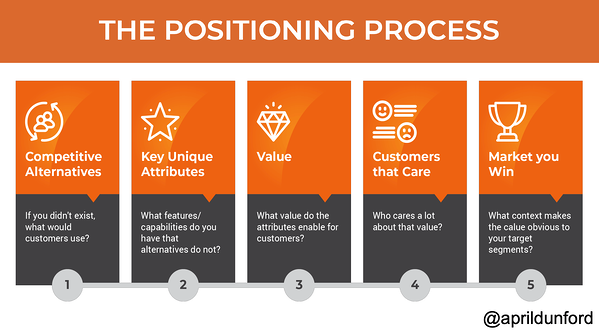
Take a look at the product positioning process below.
Using the Scientific Method for Experiments
To avoid guessing, use a simple version of the scientific method to guide your experiments:

- Ask a question: For example, “Why are users dropping off after signing up?”
- Do background research: Talk to users, look at session recordings, and review analytics.
- Construct a hypothesis: “Users drop off because the onboarding is too complex and they don’t see value quickly enough.”
- Test with an experiment: Simplify onboarding, add a guided tour, or send a targeted activation email sequence.
- Analyze results and draw conclusions: Did activation rates improve? Did retention increase?
- Iterate: Keep improving based on what you learn.
To make experiments meaningful, you’ll want a statistically sensible sample size and proper analytics in place (for example, Google Analytics, Mixpanel, or other event tracking tools).
⭐ Practical Tip: Document your hypotheses, experiments, and learnings. Over time, this becomes a treasure trove of knowledge that helps you make better decisions and onboard new team members more quickly.
Creating a Habit-Forming Product with Triggers
Long-term product-market fit is deeply connected to habit. When your product becomes a natural part of your users’ routines, they’re far more likely to keep using it, pay for it, and tell others about it.
Habits are fueled by triggers — cues that prompt users to take action. To build a habit-forming product, you’ll want to use both external and internal triggers thoughtfully.
External Triggers
External triggers tell users what to do next. They live outside of the user’s mind and often take the form of notifications, messages, or prompts. When used well, they remind users at the right time to complete actions that bring them value.
Common external triggers include:
- Email reminders and newsletters.
- In-app messages and prompts.
- Push notifications on mobile devices.
- Pop-ups in your app or on your website.
- Announcements in Slack, Discord, or community groups.
- Webinars, videos, or live sessions.
- Podcast mentions, social media posts, and press coverage.
If you release a new feature that can significantly increase value for your users, you’ll need to tell them about it through external triggers — and make it easy for them to try it right away.
Internal Triggers
Internal triggers are more powerful because they live in the user’s mind. They’re often tied to emotions, situations, or recurring needs. Over time, your goal is for users to associate certain problems or feelings with the thought of using your product.
For example:
- When someone feels overwhelmed about organizing their tasks, they open your productivity app.
- When a founder wants clarity on metrics or growth, they log into your dashboard.
- When a marketer needs inspiration for campaigns, they check your templates or content library.
Internal triggers often emerge from negative emotions (stress, confusion, anxiety) or recurring needs (planning, communication, reporting). To uncover them, you’ll want to understand the deeper reasons why people use your product in the first place.
One helpful exercise for this comes from the book Hooked: How to Build Habit-Forming Products and the “5 Whys Method” popularized by Taiichi Ohno from the Toyota Production System. You repeatedly ask “why?” about a user’s behavior until you reach the deeper motivation or problem behind it.
⭐ Practical Tip: Map out a simple loop for your product: Trigger → Action → Reward → Investment. Make sure each step is clear and compelling for your users, and optimize it over time as you learn what keeps them coming back.
Why You Might Not Have Product-Market Fit Yet (and What to Do About It)
It’s common for founders to think they’re closer to product-market fit than they really are. If you’re not seeing strong retention, reliable engagement, or organic growth, there are a few likely culprits.
1) The Product Doesn’t Fit the Problem Deeply Enough
Sometimes, users simply don’t like the product or don’t feel it solves their problem well enough to stick with it. That can be painful to hear, but it’s also incredibly valuable information.
To address this:
- Talk to users who signed up but didn’t stick around. Ask them why.
- Use exit-intent surveys or follow-up emails to gather feedback.
- Study your competition and read reviews (especially the negative ones) to find gaps you can fill.
- Iterate on your product or your concept, and then re-test with your target users.
2) Weak Marketing and Messaging
Even a strong product can feel weak if it’s marketed poorly. A common mistake is focusing too much on features and not enough on benefits and outcomes. Effective copywriting is paramount to communicate the benefits of your product to your target audience.
Ask yourself:
- Is your messaging clear about who your product is for and what problem it solves?
- Do you highlight tangible outcomes and results, not just features?
- Are you targeting the right audience segments, or are you trying to speak to everyone?
We highly suggest that you use this guide to help you effectively craft your messaging: How Founders Should Use AI for Copywriting in Startup Marketing. It is specifically geared to help founders write copy that is aligned with your users’ pain points and the benefits they receive. It helps you with positioning so you can see if you are actually getting the right signals for product-market fit.
Also consider whether you’re marketing to the wrong audience.
That’s why it’s critical to build and test your customer personas and buyer personas and treat each persona as a hypothesis to be validated.
3) Ineffective Sales Funnel and Onboarding
Your product might be strong, but if your sales funnel and onboarding are weak, many users will never reach the point where they experience real value. This includes your website, calls-to-action, email nurturing, and in-app experience.
Consider:
- Do you have clear calls-to-action throughout your website?
- Is your signup process simple and frictionless?
- Do you have effective email nurture campaigns set up to educate and activate new users? If not, use this guide to get started: How to Create an Email Nurture Campaign for Your Startup.
- Are your social media channels aligned with your funnel and optimized for lead generation? You can use this guide for help: 10 Key Lead Generation Strategies To Grow Your Startup Fast.
4) Misaligned Pricing Model
Pricing is part of product-market fit. If you’re not seeing conversions or revenue, pricing might be one of the core issues.
You might be:
- Undervaluing your product: Pricing it too low can make it seem less credible or important.
- Overvaluing your product: Pricing it too high can create friction and slow adoption.
The goal is value-based pricing: aligning your price with the value your product provides and the willingness-to-pay of your audience, while also keeping yourself competitive. Competitive analysis from your market research will help you understand where you fit relative to other solutions.
For deeper insights into pricing strategy, you can study additional resources and watch talks or videos that walk through value-based pricing and monetization models.
⭐ Practical Tip: Don’t guess your way to PMF. Use metrics like acquisition, retention, revenue, and engagement, combined with user feedback, to identify where your gaps are — then design specific experiments to address each one.
Get a deeper understanding about pricing with the YouTube video below from First Round Capital, as it describes how your price, monetization model, and business model should set so you can best position your product.
Product-Market Fit Metrics That Matter
While PMF has a qualitative “feel” to it, you should also be tracking quantitative signals. Here are some of the most important metrics to monitor as you work toward and maintain product-market fit.
Core PMF Metrics
- Activation rate: What percentage of new users reach a meaningful activation milestone (such as completing a key action) within a given time window?
- Retention rate: How many users continue to use your product after a certain number of days, weeks, or months?
- Churn rate: What percentage of users cancel or stop using your product over time?
- Engagement metrics: How often do users log in, use key features, or complete important actions?
- Customer lifetime value (CLTV): How much revenue does an average customer bring over their relationship with you?
PLG and Growth Metrics
- WAU/MAU ratio: Weekly active users divided by monthly active users, to understand how frequently people use your product.
- Time to value (TTV): How long does it take for a new user to experience their first real “aha moment” using your product?
- Referral rate: What percentage of new users arrive through referrals or invites?
- Expansion revenue: How much additional revenue comes from existing customers upgrading, adding seats, or buying add-ons?
Marketplace- or Network-Based Metrics (If Applicable)
- Match rate: In a marketplace, how often does a buyer successfully connect with a seller (or requester with provider)?
- Time to match: How long does it take for supply and demand to connect?
- Liquidity: How often are requests fulfilled or deals closed on the platform?
⭐ Practical Tip: Choose a small set of “north star” and supporting metrics that matter most to your product and business model. Track them consistently over time so you can see trends, not just snapshots.
Product-Market Fit Checklist
Use this checklist to evaluate where you are in your PMF journey and what needs more attention.
Pre-Launch Phase
- Define Your Target Market
- Have you clearly identified your ideal customer profiles and buyer personas?
- Do you understand their demographics, psychographics, behavior, and core pain points?
- Validate Market Demand
- Have you conducted interviews and surveys to confirm the existence and severity of the problem?
- Do you have evidence that enough people experience this problem often enough to support a business?
- Create and Test an MVP
- Have you built a minimum viable product or prototype that addresses the core problem?
- Have you tested it with real users from your target audience?
Post-Launch Phase
- Gather User Feedback
- Are you actively collecting feedback from early adopters and paying customers?
- Do you have a structured way to capture and organize qualitative insights?
- Iterate Rapidly
- Are you shipping improvements regularly based on feedback and data?
- Do you avoid overbuilding features before validating them?
- Monitor PMF Metrics
- Are you tracking activation, retention, engagement, and churn over time?
- Can you see trends that indicate stronger or weaker fit?
Marketing and Distribution
- Refine Your Messaging and Copy
- Does your copy clearly communicate the problem you solve and the outcome you provide?
- Does your messaging resonate with your best-fit users and use their language?
- Test Acquisition Channels
- Have you experimented with several channels (content, communities, social media, partnerships, ads) to find promising ones?
- Are you doubling down on the channels that drive the most qualified users?
- Optimize Your Conversion Funnel
- Is your website designed to convert visitors with clear positioning and calls-to-action?
- Is your onboarding experience guiding new users quickly to value?
Customer Engagement and Retention
- Build Strong Customer Relationships
- Are you engaging with your users through email, communities, or customer support?
- Do you know who your happiest customers are and why they love your product?
- Encourage Habit Formation
- Have you identified the triggers that should bring users back to your product?
- Are you using reminders, education, and value-driven prompts to reinforce usage?
- Monitor Churn and Learn from It
- Are you tracking why users cancel or stop using your product?
- Are you feeding those insights back into your product, messaging, and onboarding improvements?
Conclusion
Product-market fit is the foundation of a successful startup. It’s what separates products that briefly attract attention from those that become indispensable parts of people’s lives and businesses. Achieving it requires curiosity, discipline, humility, and a willingness to learn from your customers and your data.
As you work through the ideas and frameworks in this guide, remember that PMF is not a single moment in time — it’s a journey. You’ll clarify your audience, deepen your understanding of their problems, build and refine your MVP, run experiments, and climb the StartupDevKit PMF Ladder step by step.
Your customers are the ultimate gauge of whether your product will be successful in the market. You’ll measure that success both qualitatively — through conversations, feedback, and stories — and quantitatively, through metrics like signups, activation, retention, engagement, and month-over-month growth.
If you want guided support, structured lessons, and proven processes to help you reach product-market fit faster and with less guesswork, you’ll find all of that inside our Online Startup Accelerator Program. There, you’ll build your company’s foundation, develop your product or service, refine your positioning, create effective marketing systems, find your early tribe of customers, and learn how to fundraise when you’re ready.
How have you worked toward product-market fit so far, what experiences did you have, and/or what’s the biggest challenge you’re facing right now? Share your experience or question in the comments — I’d love to hear from you.
One Response